


How the IAMB (RWTH Aachen) integrated fermSYS Multi-Channel VOC Analytics with Eppendorf DASGIP

In modern high-cell-density fermentations, relying solely on offline analytics like HPLC or optical density (OD) creates a dangerous blind spot. By the time a metabolic shift is confirmed in the lab, valuable substrate, time, and yield are already compromised.
While the bioprocessing industry widely acknowledges the necessity of real-time, non-invasive stress detection, a common engineering hurdle remains: How do we stream Multi-Channel VOC Analytics into existing bioreactor systems without complex custom software?
Recent work at RWTH Aachen University provides a textbook example of how vendor-independent, modular bioprocess integration should look.
The Challenge: Multi-Channel VOC Analytics in Existing Lab Environmentshile highly reliable for core parameter logging, scaling up advanced multi-reactor volatile organic compound (VOC) tracking and automated metabolic stress detection often poses integration challenges.
The goal was clear: implement continuous, multi-channel off-gas monitoring (fermSENSE – MULTI FLOW 8er) and tie it directly into their existing automation environment to unlock advanced control strategies—without disrupting ongoing operations or relying on closed, proprietary ecosystems.
The Solution: Plug-and-Play Integration via Local Intranet and OPC UA
True to the fermSYS philosophy of open-architecture modularity, the integration at RWTH Aachen was executed independently by the research team using standard networking and communication protocols.
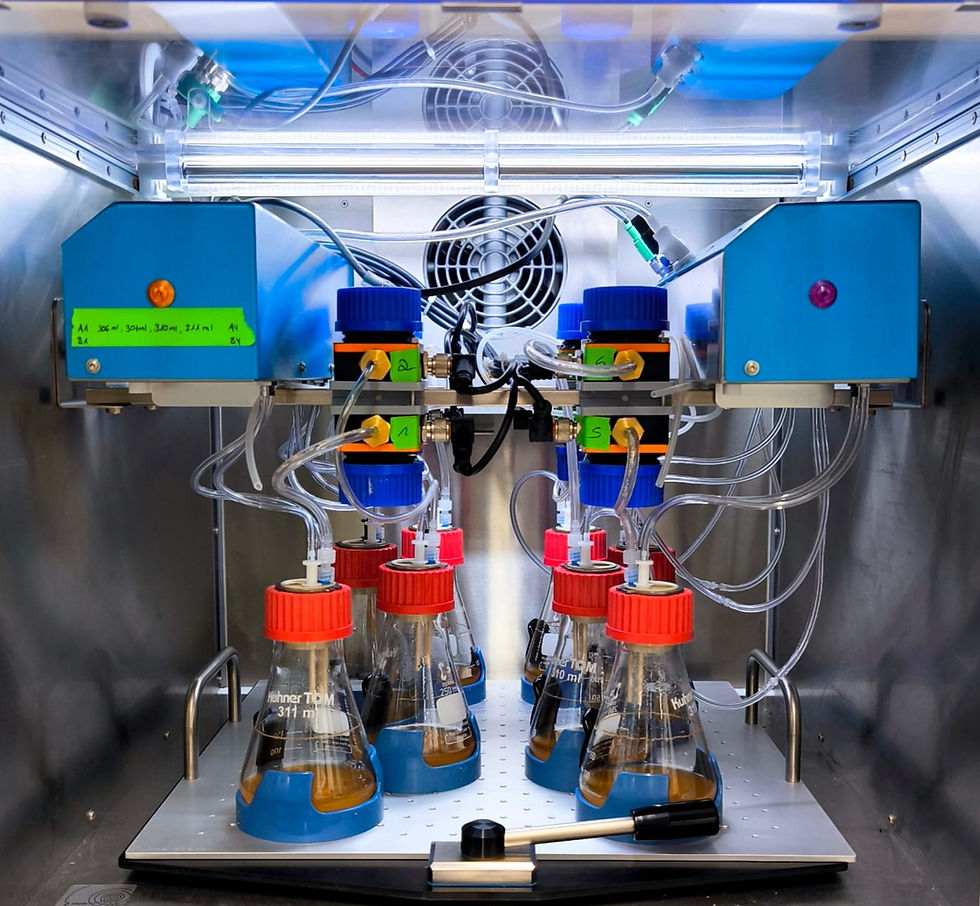
Hardware Layer (fermSENSE – MULTI FLOW 8er): Connected to the off-gas lines, capturing high-sensitivity volatile metabolic patterns across multiple parallel cultivation vessels simultaneously.
Data & SCADA platform (fermHUB): Aggregates the multi-channel sensor data and acts as an OPC UA Server.
The Bridge (Eppendorf DASGIP): Configured as an OPC UA Client on the local intranet, the DASGIP system pulls live VOC metrics and status flags directly from the fermHUB over the network.

Because both systems speak standard industrial communication languages, the entire bridge was set up simply by integraBecause both systems speak standard industrial communication languages, the entire bridge was set up simply by integrating the hardware into the local lab intranet. No custom driver nightmares, no hardware modifications.
What This Enables: True State-Driven Bioprocess AutomationBy bringing multi-channel VOC tracking straight into their existing SCADA/DAS environment, the team at RWTH Aachen has unlocked powerful capabilities:
Parallel Multi-Reactor Insight: Monitoring overflow metabolism, metabolic transitions, or stress markers across multiple vessels simultaneously.
Vendor-Independent Flexibility: Proving that advanced analytics can augment legacy infrastructure rather than replace it.
Moving Forward
The integration at RWTH Aachen underscores a broader shift in bioprocess engineering: the move away from isolated data silos toward interconnected, intelligent automation.
Are you looking to eliminate the metabolic black box in your own multi-reactor facility?
Get in touch with the fermSYS team to discuss how our modular CUBE, MULTI FLOW, fermHUB and OPC UA integration pipelines can fit your lab environment.
Don’t adapt your R&D to your laboratory infrastructure – adapt the infrastructure to your goals! Simple – affordable – flexible!


Comments